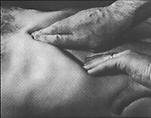
Rolfing®, Structural Integration
Address not just where the body hurts, but why the pattern exists.
Combining Rolfing® and movement education to refine your body’s options and get unstuck from years of compensation patterns and pain.
You want your body to work for you, but instead it feels like a burden that’s dragging you down or holding you back— you just can’t feel that good when you’re in pain.
The Science of Rolfing®
Precise Fascia Work for Posture Improvement, Pain Relief, and Lasting Mind/Body Reconnection
Many clients come in thinking that their physical problems simply is the way it is—hunched, in pain, and bracing through the day. But most of their patterns aren’t fixed; they’re learned. With the right input and support, your body can begin to return to it’s natural, and balanced posture.
Rolfing® and Structural Integration help your body reorganize into a more natural relationship with gravity—where support replaces bracing. As a Certified Advanced Rolfer™, I combine skillful, hands-on fascial work with guided movement to help your system start to recognize and settle into more easeful, efficient patterns.
Unlike massage or chiropractic care, Rolfing works with your body as an whole system. Rather than chasing symptoms or imposing posture, we invoke change from within—reorganizing the ways your body supports and inhibits itself by working directly with the fascia—the connective tissue network that influences how you move, feel, and perceive yourself in space.
The choices you use to initiate a movement directly effects the outcome around you. You can set yourself up for better choices.
Emerging fascia research shows this tissue is more than structural—it’s intricately sensory, vast with nerve endings, and in constant dialogue with your nervous system, shaping your self like a projection or a position in space. When fascia becomes tight or disorganized—from injury, chronic stress, or long-held patterns—your internal shape becomes contorted, your body loses its natural rhythm and your mind struggles. Rolfing works holistically to restore clarity, coherence, and ease from within, body and mind.
Sessions are unhurried and precise, typically lasting 90 minutes. Through gentle pressure and guided movement, we unwind restrictions, release held patterns, and reawaken your body’s internal sense of intelligence. You’re an active participant—breathing, sensing, and at times gently moving while the work is happening. Each session builds on the last, creating the ground for lasting change rather than temporary results.
Treatment Possibilities
low back pain, scoliosis, breathing restrictions, pelvic movement restrictions, shoulder impingement, jaw and facial restriction, neck impingements, plantar fascia, scar tissue impairment, migraines, lack of motivation, having trouble with break throughs, needing support to focus on greater healing.
What a Rolfing® Session Feels Like
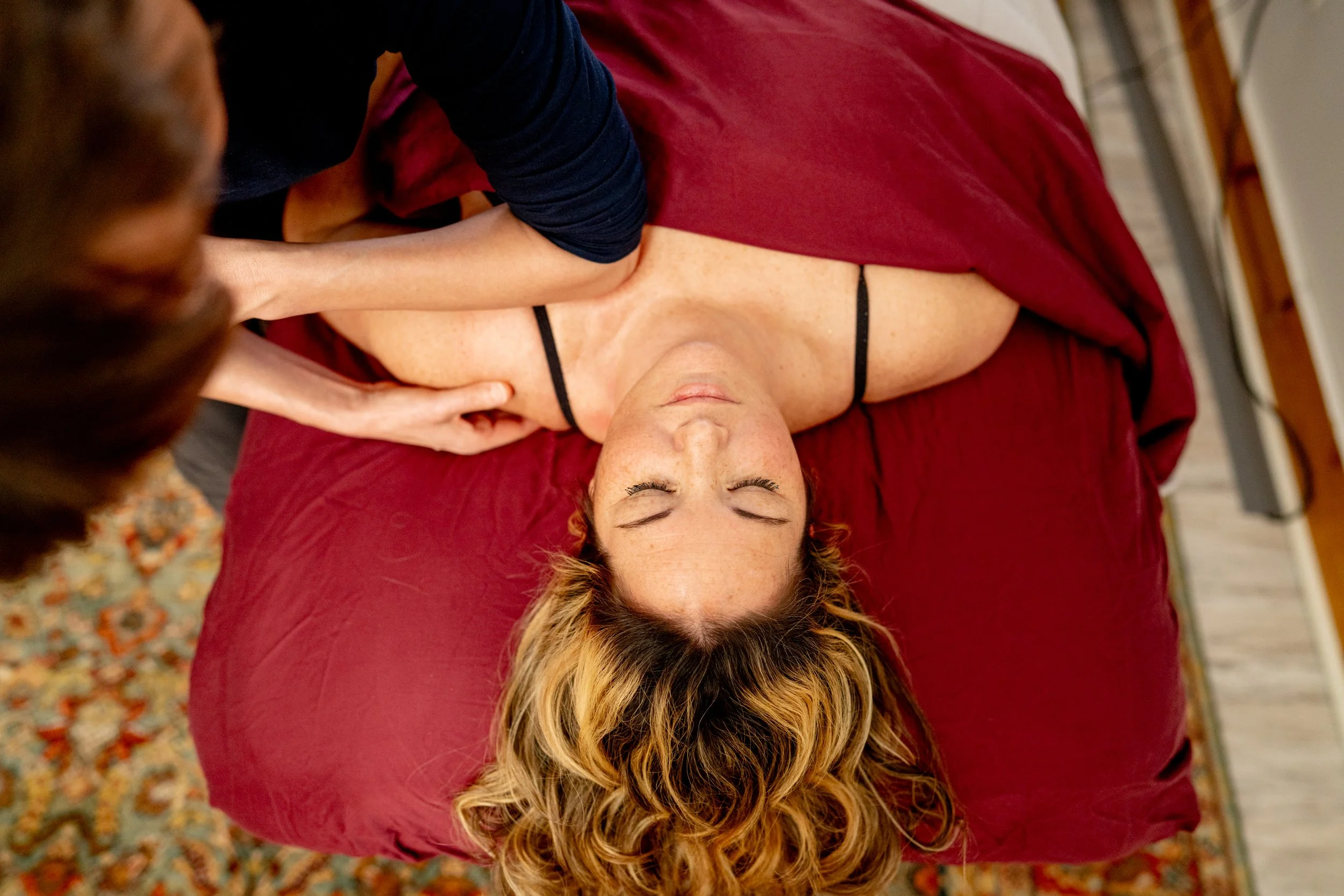
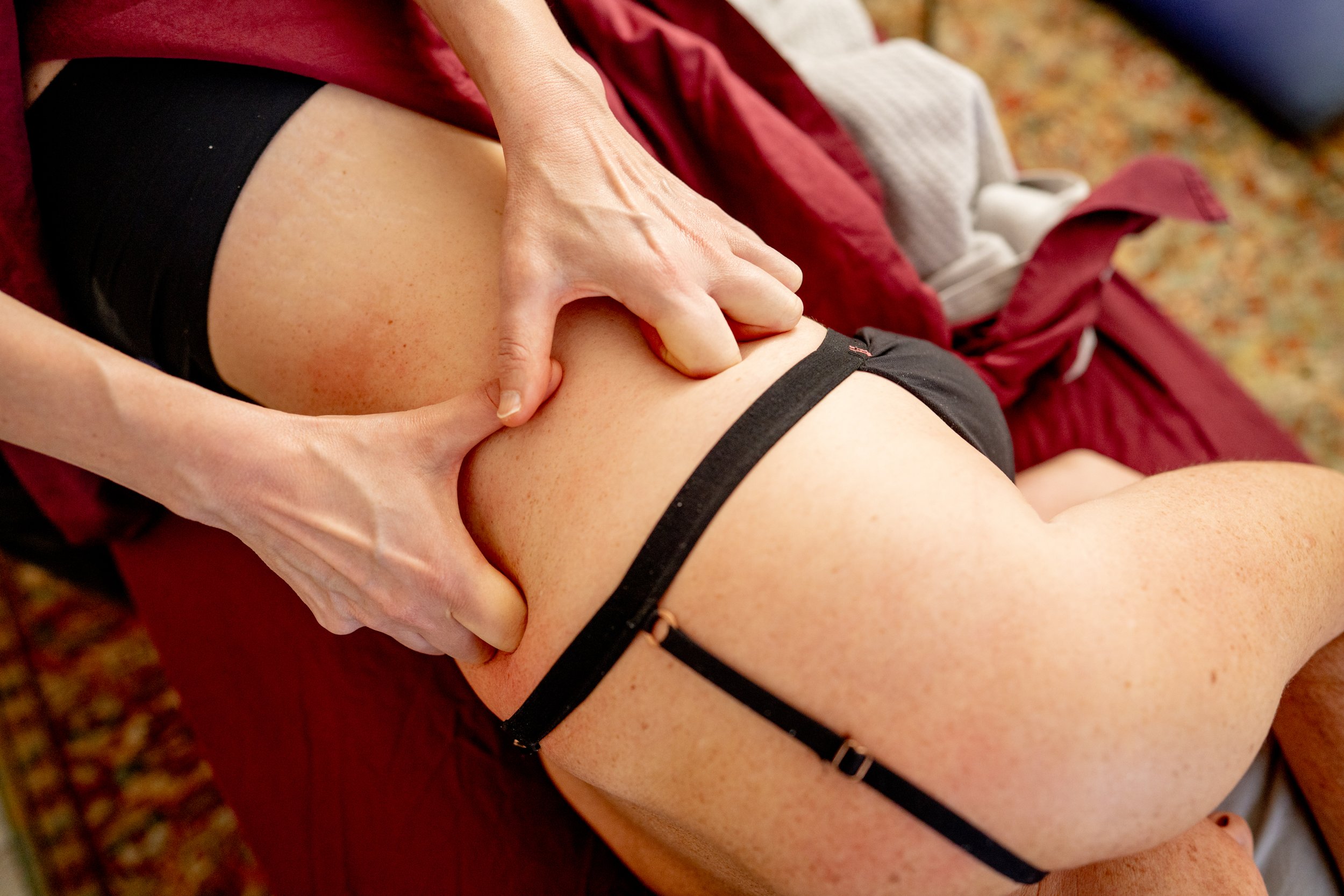
A Rolfing® session can feel similar to a massage, but with more specific contact, small movements and active awareness. You’ll sense warmth, pressure, and a sense of lengthening as tissue begins to change. The sensations can vary—at times subtle, at times more intense as held patterns start to release. You’re always in charge of how deep the work goes, you’re invited to speak up. Sessions are something to look forward to—a meaningful and energizing way to care for yourself.
What to do After a Session
After your session, a long walk—about thirty minutes to an hour—can help the work settle and integrate into your body and nervous system.
You might consider joining a Rolf Movement® class between sessions to deepen the awareness you’re building and continue developing new movement patterns beyond the session.
Who Benefit From Rolfing in Athens, GA:
My practice supports a wide range of people. This work may be a good fit if you:
Work in a physically demanding job and feel strain accumulate in your body over time
Sit at a computer for long hours and notice tension in your neck, shoulders, or low back because of it
Want to improve performance and reduce injury risk in athletics, dance, or yoga
Have seen a chiropractor and are ready to address deeper, underlying fascial patterns
Are living with chronic pain that hasn’t fully resolved with other approaches
Are working toward more natural posture and greater ease in movement
Want to settle your system and feel more at home in your body
Have been receiving massage therapy and feel ready to take the work further
How Rolfing Works: The Rolfing Ten-Series®
You want your body to work for you, but instead it feels like a burden that’s dragging you down or holding you back— you just can’t feel good when you’re in pain.
That is what makes Rolfing different. It begins with a commitment to a series of ten sessions that systematically works through your whole body to progressively clear out old postural patterns and rebuild new ones so you feel lasting change going forward.
This is a focused, time-limited investment in your body. Progress comes when you show up consistency. For best results, plan to come in every two to six weeks as you move through the series.
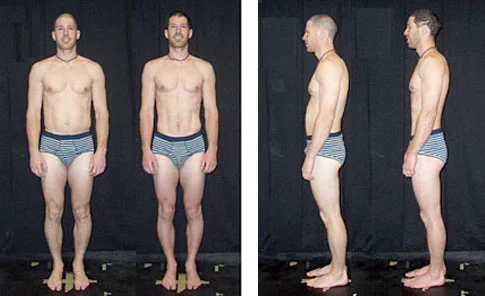
The sessions begin and end with observation—looking at how you stand, move, and walk—so changes can be seen and tracked over time. Each session concentrates on different regions of the body, building on the last to improve your overall structure and ease of movement.
The Rolfing Ten-Series: a progressive unfolding through your whole body by accessing the sensing and connecting nature of the fascia system.
Sessions 1–3: We begin with the front, back, and sides, working with the more superficial layers. Here we start to differentiate between structural restrictions and familiar holding patterns, creating space and allowing breath to move more freely.
Sessions 4–7: The focus shifts deeper, and we work with the core stabilizing layers of the body. This phase supports releasing, rebalancing and reorganizing your structure, often where more significant shifts begin to take shape.
Sessions 8–10: As your system becomes more organized, the work turns toward integration—helping you recognize, move from, and sustain these changes in your everyday life.
After completing the Rolfing Ten-Series®, many clients shift into a maintenance rhythm to support ongoing care and long-term well-being.